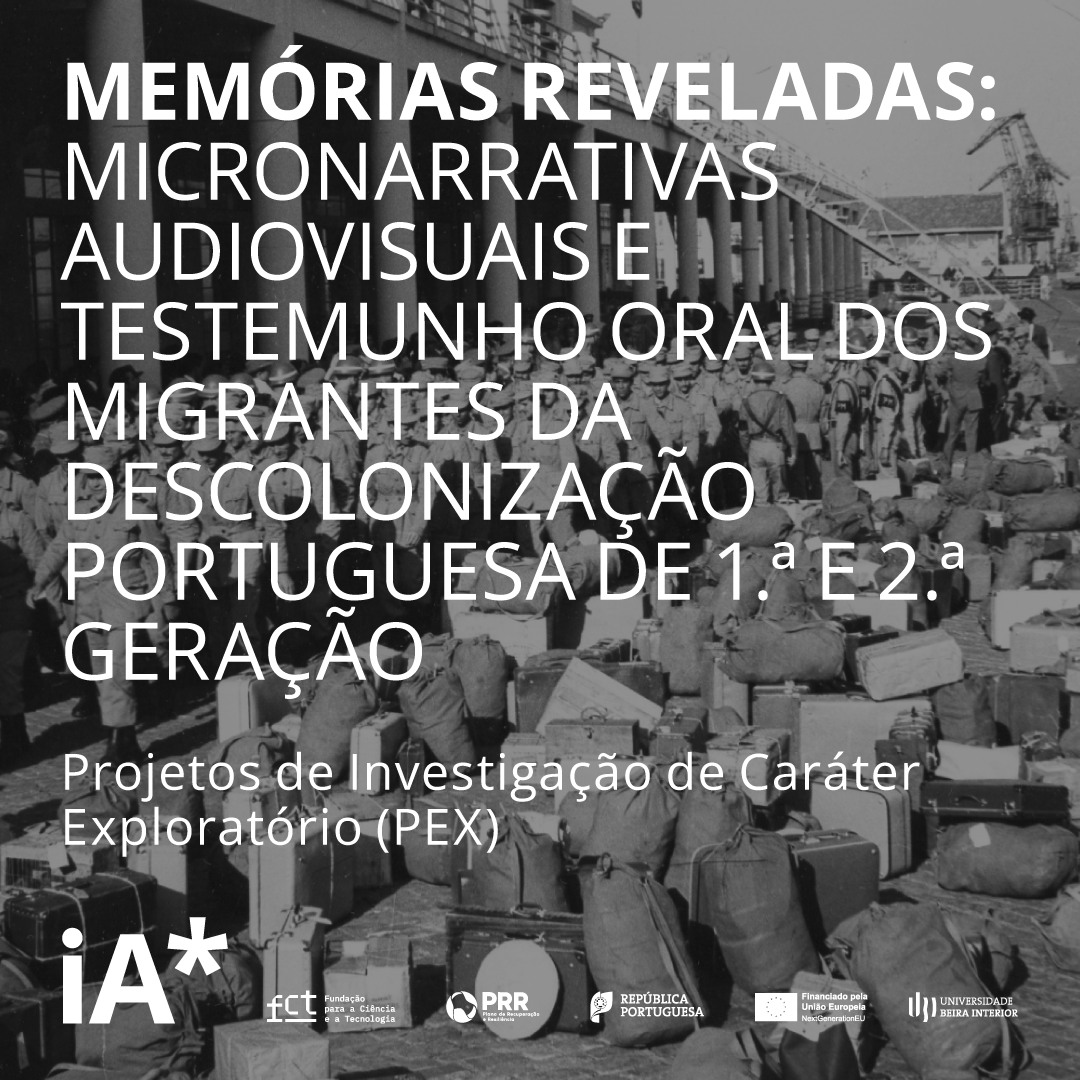
As the generation that experienced the mass migrations following Portuguese decolonisation in 1975 grows older, the opportunity to document their memories and accounts of lived experiences is rapidly diminishing. This project seeks to capture, preserve and analyse these testimonies alongside the narratives of their direct descendants. Through a series of audiovisual micro-narratives, it explores how experiences of migration and displacement are remembered, interpreted and transmitted across generations, offering perspectives that complement and extend beyond large-scale historical analyses. By bringing diverse voices and perspectives into dialogue, MUn creates a constellation of memories that fosters connections between different trajectories of decolonisation-related migration, shedding light on dimensions of this historical period that are often absent from dominant narratives.
From a methodological perspective, MUn develops an intersectional narrative approach centred on audiovisual micro-narratives: short audiovisual stories based on oral testimonies and personal archives. These micro-narratives function both as a creative methodological tool for documenting testimonies and as analytical units through which individual perspectives on historical processes can be examined. By combining interviews, archival materials and reflective commentary, the project offers an intersectional and comparative analysis of how migrants from the decolonisation period and their descendants construct, reinterpret and transmit memories of displacement. This approach makes it possible to explore how factors such as race, gender and class shape the construction, transmission and contestation of migration trajectories, deepening the theoretical understanding of issues such as postcolonial memory, identity formation and the dynamics between individual and collective memory. The project also examines personal and family narratives as mediators of broader historical processes, as well as how contested memories of displacement influence contemporary perceptions of community and national identity, making an original contribution to debates in postcolonial studies and memory studies.
Bringing together theoretical research and artistic practice, the interdisciplinary team, comprising members from four countries (Portugal, Brazil, Cape Verde and Mozambique), draws on extensive experience in audiovisual production, curatorial practice and historical analysis. The project offers a model of interdisciplinary research and civic engagement that could be replicated in other European contexts.